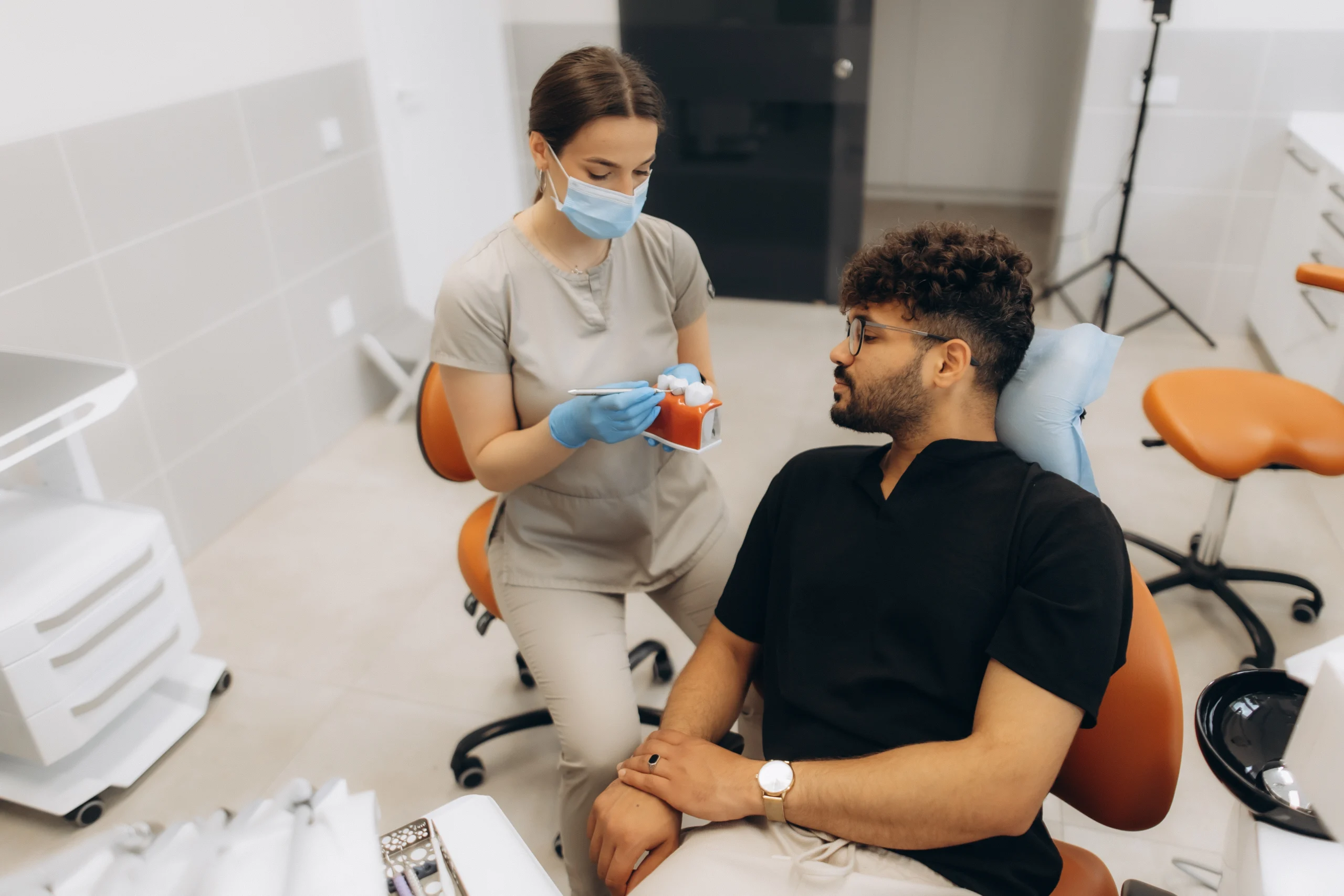
More common than
you might think.
Gum disease affects the majority of adults at some point in their lives, yet it often develops quietly, with few obvious symptoms in its early stages. It begins as gingivitis, where the gums become inflamed in response to a build-up of plaque along the gumline. Left untreated, it can progress to periodontitis, a more serious condition in which the infection spreads below the gum, attacking the bone and tissue that hold your teeth in place.
Gum disease is the single leading cause of tooth loss in adults. It has also been linked to wider health concerns, including cardiovascular disease and diabetes. The good news is that when it is caught early, it responds very well to treatment. At Parchment Street Dental, we assess your gum health at every appointment and act promptly at the first signs of concern, so the condition rarely needs to progress beyond its early, most treatable stages.
Caught early, gum disease is entirely manageable. The key is not to wait.
Book a consultation →Treating the cause,
not just the symptoms.
We take a calm, systematic approach to gum health. Whether you have noticed the early signs of gum disease or been told you need more involved treatment, we treat you at the right level, at the right pace, and with full transparency throughout.
Assessed at every visit
We check the health of your gums at every examination, measuring pocket depths and looking for early signs of inflammation or recession. Catching gum disease at its earliest stage means simpler, more effective treatment and a significantly better long-term outcome for your teeth. You will never leave an appointment without knowing exactly where you stand.
Hygiene as the first line of treatment
Professional cleaning removes the plaque and tartar that cause gum disease, reaching areas that toothbrushing alone cannot. Our hygienists combine careful scaling, polishing, and personalised home care advice so you leave with both a cleaner mouth and the knowledge to keep it that way. For many patients, this is all that is needed to bring gum health back under control.
Periodontal therapy for deeper disease
Where gum disease has progressed below the gumline, we carry out periodontal therapy: a thorough cleaning of the root surfaces to remove infection and allow the gum to reattach to the tooth. The treatment is carried out under local anaesthetic and is far more comfortable than most patients expect. In the majority of cases, it is highly effective without the need for surgery.
Ongoing maintenance and support
Once active gum disease is under control, regular maintenance is essential to keep it there. Gum disease can recur, and the same conditions that caused it in the first place need to be managed consistently. We work with you to establish a maintenance schedule that suits your needs, combining professional care with the right home care routine for your specific situation.
The stages of
gum disease.
Gum disease progresses gradually and is often painless in its early stages. Knowing the signs at each stage helps us act at the right moment. Select each stage to find out more.

Healthy gums are firm, pale pink, and fit snugly around each tooth. They do not bleed when you brush or floss, and there is no inflammation, sensitivity, or pocketing. Maintaining healthy gums requires consistent brushing, regular interdental cleaning, and professional hygiene appointments to remove the plaque and tartar your toothbrush cannot reach.

Plaque removal, scaling, polishing, and personalised home care advice. AirFlow stain removal available from £103.
Deep cleaning above and below the gumline for active gum disease. Fee confirmed following examination.
All fees are confirmed in writing before any treatment begins. No surprises, ever.
Full fees page
Healthy gums
for life.
Treating gum disease is only half the work. Keeping it under control long-term requires a consistent routine at home, combined with regular professional care. Gum disease is a chronic condition that can return if the underlying habits are not addressed, and the patients who fare best are those who treat their gum health as an ongoing commitment rather than a one-off treatment.
At Parchment Street Dental, we work with you to build a maintenance plan that fits your situation. That means the right frequency of hygiene visits, personalised home care advice, and the option to join our Denplan membership, which includes two hygienist visits per year as part of your monthly fee, keeping your gum health supported consistently throughout the year.
The patients with the healthiest gums are those who never stop looking after them.
Book a hygiene appointment →Things people
often wonder.
Everything you might want to know about gum disease and gum treatment. Still have a question? We are always happy to help.
The most common early signs are gums that bleed when you brush or floss, gums that look red or swollen, and persistent bad breath. In later stages you may notice your gums receding, teeth feeling sensitive near the gumline, or teeth that feel slightly loose. Many people have gum disease without any obvious symptoms, which is why we assess your gum health at every examination regardless of how your gums feel.
Routine hygiene appointments are generally very comfortable. For periodontal therapy, where we are working below the gumline, we use local anaesthetic to ensure the area is completely numb throughout. Most patients find the treatment considerably more comfortable than they expected. Some sensitivity or mild tenderness in the days following is normal and settles quickly.
Gingivitis, the earliest stage, is fully reversible with professional cleaning and improved home care. Periodontitis, where the bone and tissue have been affected, cannot be reversed but it can be stabilised very effectively. With the right treatment and a consistent maintenance routine, most patients keep their gum disease under control for the long term and go on to keep their teeth. The key is acting before significant damage has occurred.
For most patients, every six months is sufficient to maintain good gum health alongside a strong home care routine. If you have had active gum disease or are prone to a faster build-up of plaque and tartar, we may recommend more frequent visits, typically every three to four months. We will advise on the right frequency for your specific situation following your initial assessment.
Research consistently links gum disease to a number of wider health conditions, including cardiovascular disease, type 2 diabetes, and complications during pregnancy. The relationship appears to work in both directions: gum disease can worsen certain systemic conditions, and conditions such as diabetes can make gum disease harder to control. This is one of the reasons we take gum health seriously at every appointment, not just as a dental concern but as part of your overall wellbeing.
Healthy gums start here.
consultation