A cap that covers
and protects.
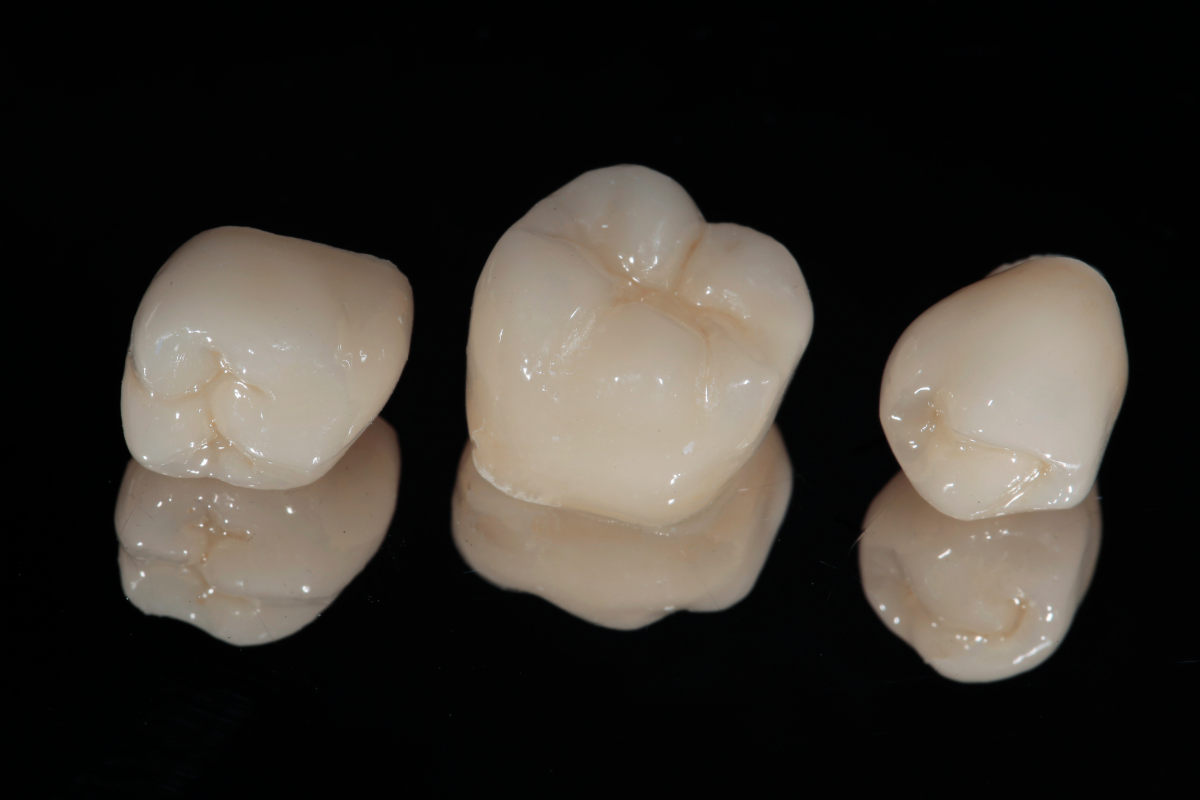
A dental crown is a custom-made restoration that fits over the entire visible surface of a damaged, weakened, or heavily restored tooth. It encases the tooth completely, restoring its original shape, size, and strength while providing a natural-looking result that blends seamlessly with the surrounding teeth.
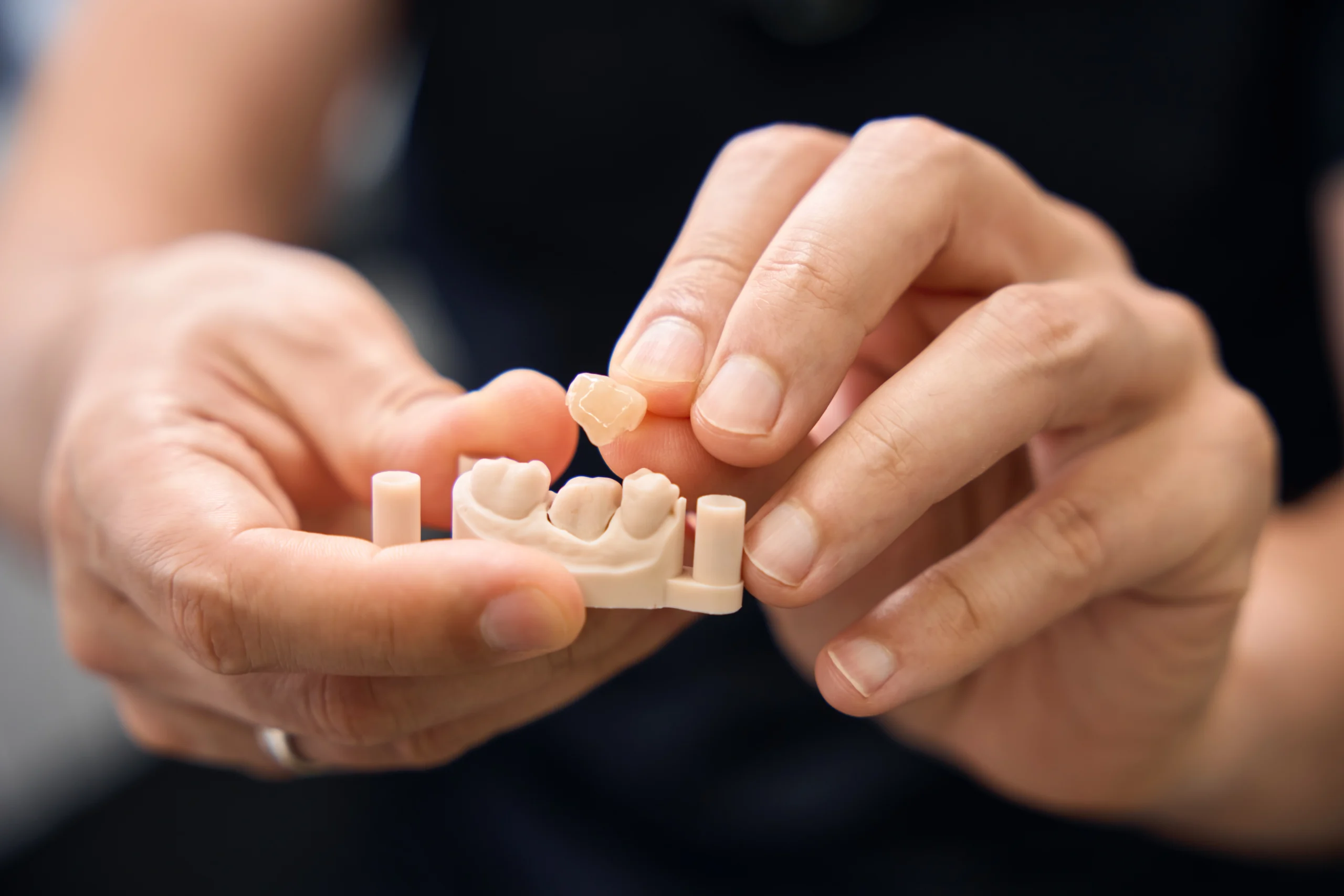
Crowns are used when a tooth has been weakened by decay, cracking, or a large existing filling that leaves insufficient natural structure for a standard restoration. They are also used to protect a tooth following root canal treatment, or to cover a dental implant. Each crown is individually crafted in a dental laboratory from detailed impressions, ensuring a precise fit and a result that is both durable and aesthetically considered.
A well-made crown should feel completely natural, both in how it looks and how it functions.
Book a consultation →The most complete
way to restore a tooth.
When a tooth has been weakened beyond what a filling can address, a crown is often the most clinically appropriate and long-lasting solution. It protects what remains and restores full function and appearance in a single restoration.
Restores full strength
A tooth that has been heavily filled, cracked, or weakened by decay is at significant risk of fracturing under the forces of biting and chewing. A crown encases the entire tooth, distributing those forces evenly and protecting the remaining natural structure from further damage. It is the most reliable way to preserve a tooth that can no longer support a conventional filling.
Looks completely natural
Modern porcelain and ceramic crowns are crafted to match the shade, shape, and translucency of your natural teeth with exceptional precision. Once fitted, a well-made crown is indistinguishable from the teeth around it. Whether the tooth is at the front or back of the mouth, the aesthetic result is considered and carefully matched to your individual smile.
Protects after root canal treatment
Following root canal treatment, a tooth becomes more brittle because it is no longer receiving nourishment through its nerve. Without the protection of a crown, it is at a significantly higher risk of fracturing. Placing a crown after root canal treatment is often strongly advised to preserve the tooth and extend its functional lifespan for many years.
A long-lasting restoration
With good oral hygiene and regular dental check-ups, a well-fitted crown can last well over ten years. The longevity of a crown depends on the material used, the quality of the fit, and how well it is maintained at home. We advise on care at every stage so you know exactly how to protect your investment and keep the crown in the best possible condition for as long as possible.
What to expect at
every stage.
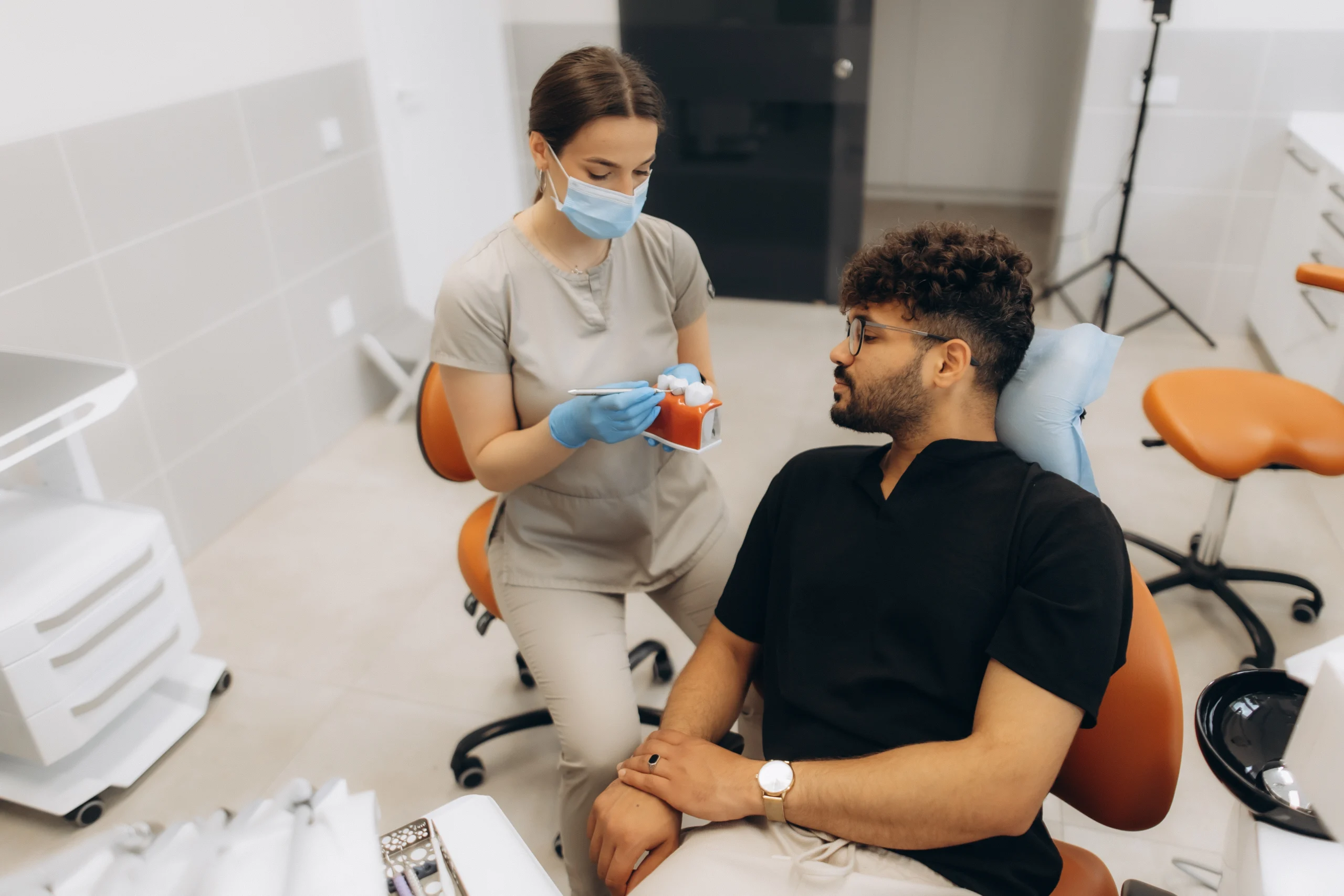
A crown is typically completed across two appointments. Select each step to understand exactly what is involved at every stage of the process.

We begin with a thorough assessment of the tooth and discuss whether a crown is the most appropriate treatment for your situation. We examine the remaining tooth structure, check the bite, and consider the overall health of the surrounding teeth and gums. All fees are confirmed clearly before anything proceeds, and there is never any pressure to commit on the day.

A dedicated assessment to confirm a crown is the right option for your tooth and discuss the treatment in full. Fully redeemable against treatment.
Custom-made porcelain crown, individually crafted by a specialist dental laboratory to match your surrounding teeth. 0% finance available through Tabeo.
Apply for financeAll fees are confirmed in writing before any treatment begins. No surprises, ever.
Full fees page
Protecting your
investment.
A dental crown should be cared for in the same way as a natural tooth. Brushing twice daily with a fluoride toothpaste and cleaning around the margin with floss or an interdental brush keeps the gum line healthy and prevents decay from developing at the join between the crown and the tooth beneath it. It is this junction that is most vulnerable over time, which is why thorough cleaning around the base of the crown matters just as much as cleaning the crown itself.
Whilst a porcelain crown is strong, it can chip under significant force. Habits such as nail biting, chewing ice, or using your teeth to open packaging should be avoided. If you grind your teeth at night, a custom night guard is strongly advisable to protect both the crown and the surrounding teeth. We can discuss this at any appointment if you think it may be relevant to you.
Regular check-ups allow us to monitor the fit and condition of your crown and address any changes early, before they become more significant.
Things people
often wonder.
Everything you might want to know before your dental crown consultation. Still have a question? We are always happy to help.
The preparation appointment is carried out under local anaesthetic, so you will not feel any discomfort during the procedure itself. Some sensitivity in the days following preparation is normal, particularly to temperature, but this is usually mild and settles as the temporary crown beds in. The fitting appointment is typically very straightforward, and most patients are surprised by how comfortable the overall process is.
With good oral hygiene and regular check-ups, a well-fitted porcelain crown can last well over ten years. Longevity depends on how well you maintain the area around the crown, any habits that might put excessive force on it such as teeth grinding, and whether you attend regular appointments so we can monitor its condition. We advise on care at your fitting appointment and are always available if anything changes.
Modern porcelain crowns are designed to be indistinguishable from natural teeth. Each crown is individually crafted by a specialist dental laboratory, matched to the shade, shape, and translucency of your surrounding teeth. Whether the crown is at the front or back of the mouth, the result is carefully considered so that it blends naturally and looks completely at home in your smile.
Not always, but it is strongly recommended in the majority of cases. Following root canal treatment, a tooth becomes more brittle and is at a significantly higher risk of fracturing under normal biting forces. For back teeth that bear the brunt of chewing, a crown is almost always advisable. For front teeth, the decision depends on how much natural tooth structure remains. We will always give you an honest recommendation based on your specific situation.
If your crown comes off, keep it safe and contact us as soon as possible. Do not try to reattach it yourself with adhesives. In most cases we can re-cement or replace the crown promptly. The prepared tooth underneath will be sensitive without its crown, so getting it seen quickly is important. We accommodate urgent appointments for exactly this kind of situation, and registered patients can always reach us for advice.
Dental crown
A custom-made cap that fits over a damaged or weakened tooth, restoring its shape, strength, and appearance. Used when the tooth itself is still present but needs protecting or rebuilding.
Book a consultation
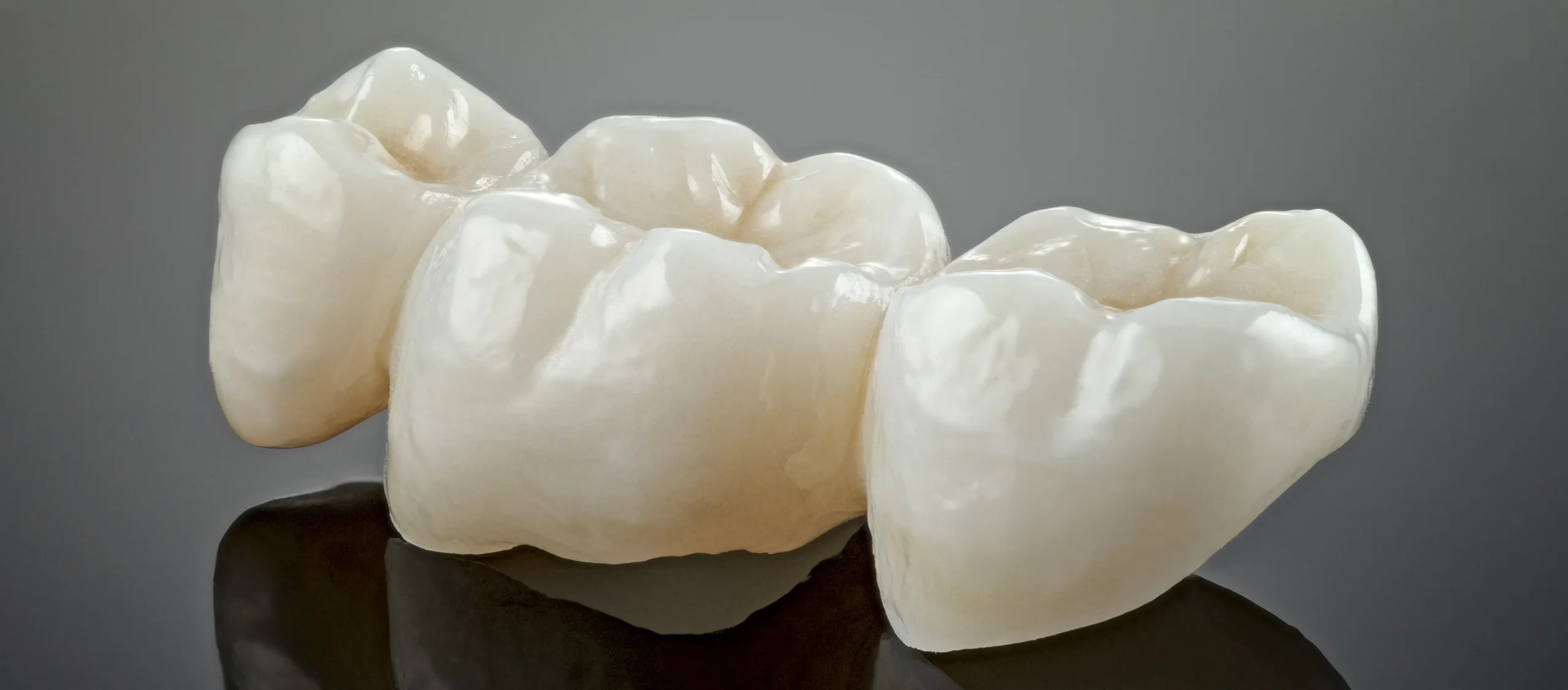
Dental bridge
A fixed restoration that replaces one or more missing teeth by anchoring a false tooth between two crowns on the neighbouring teeth. Used when a tooth has been lost entirely and an implant is not being pursued.
Find out moreYour tooth, made whole again.
consultation